
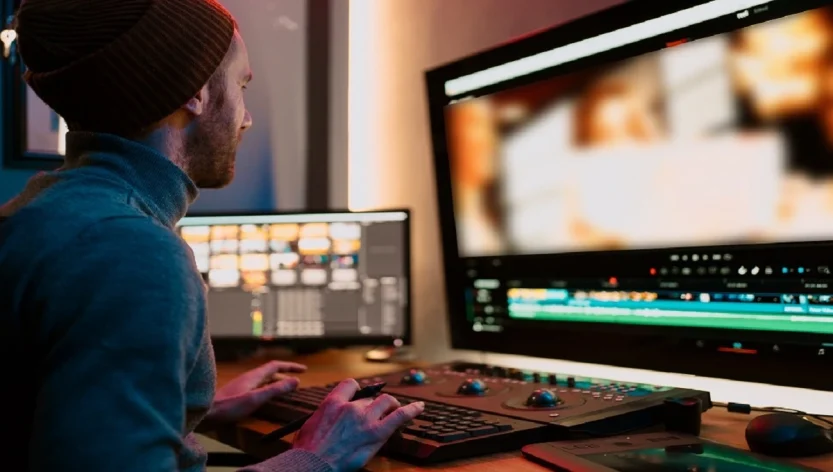
Video editing has been the most tedious aspect of creating content for years. A video that may be 10 minutes long can involve hours of going through duplicates, deleting the parts that you don’t like, adding sliders and captions to all those pieces, working on audio adjustments as needed, etc.
And artificial intelligence is disrupting that process. Modern editing tools driven by AI can assist creators in speeding through repetitive tasks with more efficiency while keeping you at the control of all important creative decisions. AI is being implemented at different stages within the entire editing workflow rather than serving just one isolated purpose, as seen in 2026.
The Growing Role of AI in Video Editing
Now, AI video editing does not mean of just turning over an entire project to a system that you took the time out to automate. In many other cases, it is more like a creative assistant.
They can analyze footage to find the most useful segments, add captions, cut silence, enhance audio level/quality, reframe content and draft a good version of it in order for us to start drafting social media posts from them. It gives creators the capacity to spend less time on repetitive production processes and more time conceptualising storytelling and presentation.
For instance, a Creator who had a long interview can use AI to find any topic or key part of the recording rather than watching through it all. The editor can then go through those picks and see what actually makes it into the final video.
This is becoming more and more common as AI tools start to transition from simple one-click options to larger editing processes.
Natural Language Is Becoming an Editing Tool
The use of natural-language instructions is one of the most obvious changes.
Thus allowing the creators to describe the change that they want in simple language rather than searching for each and every section of a timeline manually. Such an instruction could be as trivial as getting rid of unnecessary pauses, generating captions, searching for some portion of spoken text or create a shortened version of a longer video.
This allows for greater ease of editing, especially if you are not familiar with sophisticated editing programs.
Experimentation can also be easier when tools are designed for conversational workflows. This allows a creator to iterate an idea, see if it worked, then adjust without having to hand-build the entire project again.
For people looking for accessible editing options, a ChatGPT video editor free workflow can also be useful for exploring AI-assisted video creation and editing without immediately committing to a complicated professional setup.
Faster Editing Does Not Mean Less Creativity
One might assume in some situations that using AI editing eliminates the creativity side of things. The very best workflows actually rely heavily on human decisions.
An AI system may discover a useful clip, but a human still needs to determine if that clip supports the story. While automatic captions save time, they need to be reviewed for mispronounced words, names spelled incorrectly, incorrect punctuation and timing.
Like all the other trades, many of the creative decisions you make—including pacing, emotional emphasis, music selection, visual style and narrative structure (to name a few)—are still important.
AI is great for eliminating repetitive tasks. New research and industry reporting indicates that creators are leveraging AI tools more than ever to help them save time during editing and production. For example: Adobe found that most creators surveyed tend to use AI video tools regularly and 70% of respondents claimed they have saved at least 30 minutes per video.
AI Makes Repurposing Easier
With modern content creators, it is just not thatcommon for a video to only be published in one format.
If you shoot a long Youtube then it can be multiple Shorts, Instagram Reels, TikTok or promotional cut-downs. Generating each version by hand can add a lot of extra work to what is already a long content editing journey.
AI can locate parts of lengthier videos that may contribute to the shorter clips. It can also help with captions, reframing and tailoring content for multiple aspect ratios.
The best practice is to preview each of those versions before publishing. A clip that fits well within a landscape would likely not translate into a vertical one automatically. Keep the subject and captions visible along with critical visual information.
This is why the AI editing workflows today focus more on generating multiple formats out of one source project instead of putting every version as a totally independent production.
Better Captions and Audio
So captions these days are an important part of the online video. Most viewers watch sound-less content while subtitles can help you with accessibility.
Transcribing with the help of AI can make machine-generated dialog captions for you in a fraction of the time it takes to manually type out every sentence. Other tools can also recognize voices, align captions with speech, and convert them to more languages.
Another practical use is audio enhancement. They may therefore help to reduce unwanted background noise, improve the clarity of speech and balance inconsistent levels.
However automated results cannot escape review. This can occur through a minor transcription error normally owing to technical terms, names or multiple speakers present in videos.
Browser-Based Editing Is Becoming More Practical
One notable trend is the increasing editability from a browser.
Video editing has usually demanded hardware and software along. On the other hand, browser-based tools are an easier way with more flexibility that creators can work from different computers without an app installation.
This is especially beneficial for students, freelancers, small businesses and creators that find themselves needing to switch between devices.
Online editing is increasingly edging toward handling kinds of work that have up until now expected separate work area applications, as program innovations and cloud-based AI capacities keep on developing.
What AI Still Cannot Replace
Although AI is evolving rapidly, it does not replace the human review.
A machine-generated edit might be “correct” while being, at the same time, boring or unintelligible or cold. Good editing makes one able to understand the audience and make sense of why that shot goes before another.
So AI-generated edits should be treated by creators as stepping stones, not end products.
A practical workflow is simple:
- Record or collect the original footage.
- Use AI to organize and prepare the material.
- Generate a rough cut or automated edits.
- Review every important section.
- Adjust pacing, storytelling, captions, and audio.
- Export the final version for each platform.
This approach combines the speed of automation with human creative judgment.
Choosing the Right AI Editing Workflow
The optimal workflow is based on the content type being produced.
The use case for a YouTube creator could include long-form editing, chapters, captions and short-form repurposing. A business might focus on product videos and social media ads. For example, a teacher may prioritize clearer audio narration, screen recordings and correct captions.
Instead of picking an AI tool just because it has the most features, creators should first identify what their greatest editing bottleneck is.
Good search and transcription features are also helpful if useful moments take too long to find If the primary issue is generating captions, first focus on accurate transcriptions. If it takes hours to create versions of these for social, build around tools that allow you to clip and reframe automatically.
The Future of AI-Assisted Video Editing
AI video editing is progressing towards workflows where a creator can describe the desired end result, be shown an automatically compiled version of that content, and then make final creative decisions independently.
Technology ease of integration has also improved. Rather than employing many tools for transcription, captions, visual adjustments, repurposing and editing, connected workflows are allowing creators to access so much of this in a single solution.
But traditional editing skills are not made meaningless from that fact. It doesnt change those skills, but it does change where those skills matter. This allows your editors to spend less time doing repetitive work and more time getting the story, visual style, or overall look of the project just right.
So, saying that the most obvious use of AI is speeding up video is not correct. It assists creators in removing unnecessary production friction with the goal of maintaining creative control to humans.
Conclusion
AI is so caught up in video production today. AI can eliminate repetitive editing tasks, from organizing footage and generating captions to making rough cuts and customizing videos for various platforms.
Nonetheless, we still rely on a person to determine whether the end product is good enough. By leveraging automation and carefully reviewing their work, creators can streamline workflows without compromising their storytelling, accuracy or individuality.
As such, it seems the most useful AI editing tools will be those which help take a more direct control over pro quality workflows rather than attempting to automate everything.
Read More: Fanquer: Explained Everything You Need to Know in 2026