
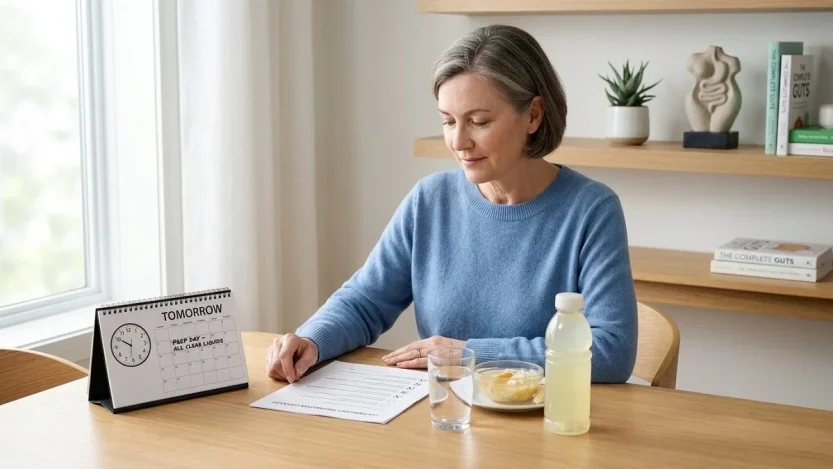
Colonoscopy prep is the process of emptying the colon before a colonoscopy so the doctor can see the lining clearly. It usually involves short-term diet changes, a stretch of clear liquids, and a prescribed bowel-cleansing medicine. A well-cleaned bowel makes polyps and other changes easier to find. Leftover stool can hide the lining and may force a repeat exam.
Follow the written plan from your own doctor or endoscopy center. Colonoscopy preparation varies by bowel-prep product, medical history, medicines, and the time of the procedure.
What Is Colonoscopy Prep?
Colonoscopy prep also called bowel preparation or bowel cleansing is the set of steps that clear stool from the large intestine. A colonoscopy uses a thin, flexible camera to look at the colon lining. Stool left behind blocks that view.
A complete cleanout typically produces watery stool that becomes pale or clear. That empty colon lets the doctor inspect the lining, take biopsies if needed, and remove polyps when they are found. Most colorectal cancers start as polyps, which is why a clear view matters.
How to Prepare for a Colonoscopy
There is no universal timetable. Read the colonoscopy instructions as soon as you get them, often one to two weeks ahead. Fill the prescription, ask about medicines, and buy the drinks your plan allows.
When told, shift to a lower-fiber diet. Later you typically stop solid food and switch to clear liquids. Then you take the prescribed bowel-prep solution or tablets on a set schedule. Many people use a split-dose regimen: part of the medicine the evening before, and the rest the morning of the procedure. Split dosing is widely recommended because it often cleans the colon more thoroughly and is easier to tolerate. Some afternoon exams use a same-day regimen instead.
Stay hydrated with the fluids your plan allows. In many split-dose schedules, the second portion starts about four to six hours before the colonoscopy and is finished at least two hours before the start time. Your facility may use different cutoffs, especially around sedation and fasting. Finish the entire prep unless your care team tells you otherwise. Stopping early because the stool already looks clear can still leave residue higher in the colon.
What Can You Eat Before a Colonoscopy?
A colonoscopy diet usually has two phases: a lower-fiber period, then a clear-liquid period. How long each lasts depends on your risk of a poor cleanout and on your center’s protocol. No single meal plan is right for everyone.
In the days leading up, many plans limit high-fiber foods such as whole grains, raw vegetables, beans, nuts, seeds, popcorn, and some fruits. Some people start several days before. Others, especially those at lower risk of inadequate prep, may only change their diet the day before a colonoscopy. For that day, some plans allow low-residue meals for breakfast and lunch rather than liquids only. Once you are told to stop solids, regular meals pause until after the procedure.
What Can You Drink During Colonoscopy Prep?
Clear liquids are drinks and foods you can see through. They contain no pulp, solids, or cream, so they help you stay hydrated without leaving residue in the colon.
Liquids commonly allowed include water; fat-free broth or bouillon; plain coffee or tea without milk or cream; pulp-free juices such as apple or white grape; and sports drinks or gelatin in light colors such as lemon, lime, or orange.
Providers often ask people to skip red and purple drinks and gelatin, because those colors can look like blood during the exam. Cloudy juices such as orange or pineapple, milk, creamers, and alcohol are typically not allowed. Some centers also restrict orange-colored liquids. People with diabetes, kidney disease, or fluid limits may need a modified list. If a drink is not named in your instructions, skip it or call. You will also be told when to stop all liquids, often a few hours before the procedure.
What Happens the Day Before a Colonoscopy?
Solids usually stop. You drink clear liquids through the day, then start the bowel-prep medicine on the clock printed in your instructions. The medicine causes frequent, watery bowel movements. That is how bowel cleansing works. Stay close to a bathroom. Many people begin having loose stool within a few hours of the first dose.
Cramping, bloating, and nausea are common. If the solution makes you queasy, slow down rather than forcing large amounts at once. Keep drinking the clear liquids your plan allows so you do not get dried out. Plan a quiet evening; sleep may be interrupted.
What About Medications?
Some medicines affect bleeding risk, blood sugar, or how well the colon can be seen. Tell your doctor about every medicine, vitamin, and supplement you take.
Categories that often need a specific plan include blood thinners; diabetes medicines, including insulin and some weekly injections; iron supplements or iron-containing multivitamins; and certain weight-management medicines. Fiber supplements and anti-diarrheal medicines may also require a temporary pause because they can interfere with a cleanout.
Do not stop, skip, or change a prescription on your own. Blood thinners, for example, protect against clots. Only the prescribing clinician and the endoscopy team can decide whether and when to adjust them. Ask when the procedure is scheduled, not the night before.
Common Side Effects of Bowel Prep
Most people have frequent watery stool, urgency, bloating, gas, abdominal discomfort, and nausea. Individual experiences vary. Slowing the pace of drinking, chilling the solution if the product allows it, and using a straw can make it easier to keep going. Repeated wiping can irritate the skin around the anus; some endoscopy centers suggest unscented wipes and a simple barrier ointment.
Not every symptom is automatically harmless. Persistent vomiting, severe pain, dizziness, or an inability to keep fluids down needs a call to the care team.
When Should You Contact Your Doctor?
Call your doctor or endoscopy unit if you cannot finish the prep, vomit after taking it, or have side effects that stop you from following the instructions. Also call if you have no bowel movement after a reasonable stretch from the first dose some units ask patients to check in around six hours or if you are unsure whether the cleanout is working.
Seek prompt medical attention for repeated vomiting, marked dizziness, fainting, little or no urine, a fast or irregular heartbeat, severe or worsening abdominal pain, vomiting blood, or allergic symptoms such as rash, swelling, or trouble breathing. If you have diabetes, follow the blood-sugar plan your healthcare team gave you and contact your clinician if your readings are too low or too high to manage as instructed.
Tips for Making Prep Easier
Read the full packet before the first dose. Picked up the prep and allowed clear liquids a few days early. Stay home once the medicine starts, and follow the timing as written. Chill the solution if the product allows it, and sip through a straw. A lemon or lime wedge, or gum between sips, helps some people with the taste. Keep toilet paper, unscented wipes, and a towel nearby. If you will receive sedation, arrange a ride home. You should not drive yourself afterward.
Frequently Asked Questions
What is colonoscopy prep? Colonoscopy prep is the process of clearing the colon before a colonoscopy so the doctor can see the lining clearly. It commonly includes diet changes, clear liquids, and a prescribed bowel-cleansing medicine. Exact steps vary, so follow the plan from your healthcare team.
How long does the preparation take? Many people change their diet for one to several days and take the bowel-prep medicine the evening before, often with a second dose the morning of the procedure. Frequent stool usually lasts several hours. Follow your written schedule.
What can I eat during the prep diet? Earlier in the process, your healthcare provider may recommend a low-fiber or low-residue diet. Once you are on clear liquids, solid food stops until after the exam. Use only the foods named in your colonoscopy instructions.
Can I drink water during colonoscopy prep? You can usually drink water during the clear-liquid phase, which can help you stay hydrated. You still need to stop all liquids at the time your facility specifies, often a few hours before the procedure.
Why do I have to drink bowel prep? The solution flushes stool out of the colon. Without that cleanout, leftover material can hide polyps and other findings. Finishing the prescribed amount gives the doctor the best chance of a complete exam.
What if I cannot finish the bowel prep? Call the endoscopy unit or the on-call number on your instruction sheet. Incomplete prep can lead to a poor view and a repeated procedure. Do not guess about next steps.
Can I take my regular medications? Some medicines continue as usual; others need a timed change. Blood thinners, diabetes drugs, iron, and certain other prescriptions often require extra guidance. Ask your healthcare provider. Do not stop a medicine on your own.
What happens if the bowel prep is not working? If you are not having bowel movements, cannot keep the solution down, or the stool is still thick and dark, contact your care team. They can tell you whether to continue, adjust, or reschedule.
Colonoscopy prep is inconvenient, but it is the part of the exam you control. Follow your own colonoscopy instructions, finish the bowel prep your healthcare provider prescribed, and call if something gets in the way.
This article is for general educational information and does not replace instructions from a doctor, gastroenterologist, or endoscopy center.