
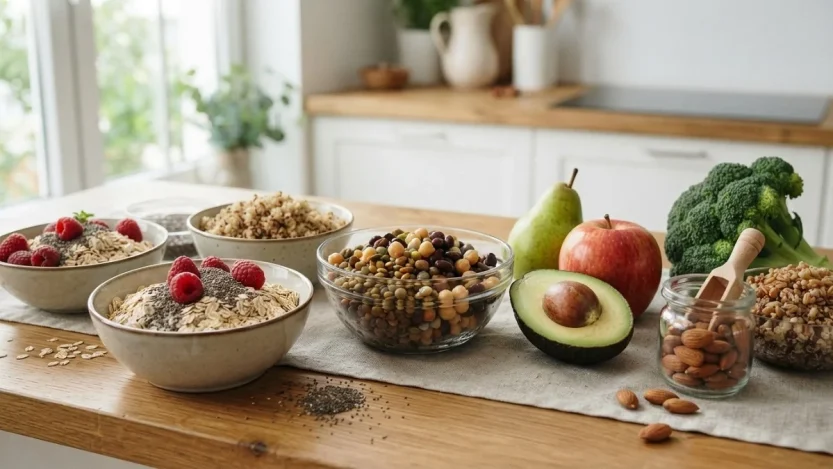
Eating more fiber doesn’t have to mean buying special foods or overhauling every meal. Many everyday foods already contain a useful amount of dietary fiber, especially beans, lentils, whole grains, fruits, vegetables, nuts and seeds.
This guide looks at 25 high fiber foods, how much fiber they typically provide, the type of fiber they contain, and simple ways to use them in everyday meals. It also explains how fiber may support digestion and fullness, how much you generally need, and what to watch for if you’re increasing your intake.
Fiber amounts can vary with serving size, preparation method and brand, so the figures below are approximate. USDA FoodData Central is one of the main U.S. references for food composition data, while Mayo Clinic also publishes a practical high-fiber food chart based on USDA data. FoodData Central
What Are High Fiber Foods?
Dietary fiber is a type of carbohydrate found mainly in plant foods. Unlike most carbohydrates, fiber isn’t fully broken down and absorbed during digestion.
There are two broad types:
Soluble fiber dissolves in water and can form a gel-like substance in the digestive tract. Oats, beans, lentils, apples, chia seeds and barley are good examples.
Insoluble fiber does not dissolve in water. It adds bulk to stool and helps food move through the digestive system. Whole-wheat foods, nuts, seeds and many vegetables contain it.
Most plant foods provide a mixture of both rather than only one type. Mayo Clinic
25 Best High Fiber Foods
Here is a quick comparison before looking at each food in more detail.
| Food | Typical Serving | Approx. Fiber | Easy Way to Eat It |
|---|---|---|---|
| Split peas | 1 cup cooked | 16 g | Soup or stew |
| Lentils | 1 cup cooked | 15.5 g | Curry, soup, salad |
| Black beans | 1 cup cooked | 15 g | Bowls, tacos, salads |
| Kidney beans | 1 cup cooked | about 11–13 g | Chili or salad |
| Chickpeas | 1 cup cooked | about 12–13 g | Hummus, curry, salad |
| Chia seeds | 1 oz | 10 g | Oats, yogurt, pudding |
| Green peas | 1 cup cooked | 9 g | Side dish or soup |
| Raspberries | 1 cup | 8 g | Yogurt, oats, snacks |
| Blackberries | 1 cup | about 7.5 g | Smoothies or yogurt |
| Artichoke | 1 medium cooked | about 7 g | Side dish or salad |
| Avocado | 1 cup sliced | about 10 g | Toast, salads, bowls |
| Barley | 1 cup cooked | 6 g | Soup or grain bowl |
| Whole-wheat pasta | 1 cup cooked | 6 g | Pasta meals |
| Pear | 1 medium | 5.5 g | Whole fruit snack |
| Broccoli | 1 cup cooked | 5 g | Side dish or stir-fry |
| Brussels sprouts | 1 cup cooked | 4.5 g | Roasted or steamed |
| Apple with skin | 1 medium | 4.5 g | Snack or oatmeal |
| Oatmeal | 1 cup cooked | 4 g | Breakfast |
| Sweet potato | 1 medium | about 4 g | Baked or roasted |
| Flaxseed | 2 tbsp ground | about 4 g | Yogurt or oats |
| Almonds | 1 oz | 3.5 g | Snack or topping |
| Popcorn | 3 cups air-popped | 3.5 g | Snack |
| Pistachios | 1 oz | 3 g | Snack |
| Edamame | 1 cup cooked | about 8 g | Salad or snack |
| Pumpkin seeds | 1 oz | about 2 g | Topping or snack |
Several values in this table, including split peas, lentils, black beans, raspberries, pears, green peas, broccoli, barley, oatmeal, popcorn, almonds and pistachios, line up with Mayo Clinic’s USDA-based food chart. Exact numbers can differ slightly among databases and preparation methods. Mayo Clinic
1. Lentils
One cup of cooked lentils provides about 15.5 grams of fiber, making them one of the easiest foods to use when you want a substantial fiber boost. Mayo Clinic
Lentils contain both soluble and insoluble fiber. They also work well in meals because they pair easily with vegetables, rice, soups and curries.
Try them in:
- lentil soup
- dal
- salads
- grain bowls
- vegetable stews
If you don’t eat legumes often, starting with a smaller portion may be more comfortable for your digestion.
2. Chickpeas
Chickpeas, also called garbanzo beans, are another fiber-rich legume. A cooked cup generally provides around 12 to 13 grams of fiber, although the amount varies by preparation.
They offer a mixture of soluble and insoluble fiber and are easy to use in both hot and cold meals.
Add them to salads, roast them for a crunchy snack, blend them into hummus, or use them in curries.
USDA FoodData Central lists both dry and canned chickpeas, which is a reminder that nutrient figures can differ depending on the form you buy. FoodData Central
3. Black Beans
A cup of cooked black beans contains about 15 grams of fiber. Mayo Clinic
That makes them useful for anyone trying to raise fiber intake without relying on very large portions of food.
Black beans work well in rice bowls, salads, tacos, soups and chili. They also provide plant protein, which can make meals feel more substantial.
4. Kidney Beans
Kidney beans typically provide around 11 to 13 grams of fiber per cooked cup, depending on the variety and preparation.
Their firm texture works especially well in chili, soups, mixed bean salads and rice dishes.
USDA FoodData Central includes both dark red and light red kidney beans, including canned versions, so values can vary slightly between products. FoodData Central
5. Split Peas
If you’re looking for foods with lots of fiber, split peas deserve a place near the top of the list.
One cup of cooked split peas provides about 16 grams of fiber. Mayo Clinic
They’re especially useful in soups and stews, where they soften as they cook and create a thick texture without needing cream.
6. Oats
A cup of cooked oatmeal provides roughly 4 grams of fiber. Mayo Clinic
Oats are especially well known for beta-glucan, a soluble fiber. Harvard’s Nutrition Source notes that beta-glucans in oats and barley are highly fermentable fibers that can act as prebiotics and slow digestion. The Nutrition Source
For an easy higher-fiber breakfast, top oatmeal with berries, chia seeds, flaxseed or nuts.
7. Chia Seeds
Just one ounce of chia seeds provides about 10 grams of fiber. Mayo Clinic
Chia contains mainly insoluble fiber along with mucilage, the gel-forming material that develops when the seeds absorb liquid. That gel-like quality contributes soluble-fiber properties as well. The Nutrition Source
Mix chia into oatmeal, yogurt or smoothies, or soak it in milk to make chia pudding.
8. Flaxseeds
Ground flaxseed provides roughly 4 grams of fiber in two tablespoons.
Flax contains both soluble and insoluble fiber. Grinding it makes it easier to mix into food and also makes other nutrients in the seed more accessible than eating it whole.
Try it in oats, yogurt, smoothies or homemade baked goods.
9. Raspberries
Raspberries are one of the more fiber-rich commonly eaten fruits.
One cup provides about 8 grams of fiber. Mayo Clinic
They can be eaten fresh or frozen and work especially well with yogurt, porridge, cereal and smoothies.
10. Blackberries
A cup of blackberries provides around 7 to 8 grams of fiber.
Like raspberries, they offer fiber without requiring a large serving. Their seeds contribute to their fiber content.
USDA FoodData Central lists raw blackberries as a Foundation Food and periodically updates nutrient values as new data become available. FoodData Central
11. Pears
A medium pear provides about 5.5 grams of fiber. Mayo Clinic
Eating the skin matters because a good share of the insoluble fiber is found there.
Pears are easy to pack as a snack and also work sliced into oatmeal or salads.
12. Apples
A medium apple with the skin contains about 4.5 grams of fiber. Mayo Clinic
Apples contain pectin, a soluble fermentable fiber, as well as insoluble fiber in the skin. The Nutrition Source
For the most fiber, eat the whole fruit rather than drinking apple juice.
13. Avocado
A cup of sliced avocado contains roughly 10 grams of fiber, while smaller portions naturally provide less.
Avocado offers a mixture of soluble and insoluble fiber and is easy to add to toast, salads, wraps and grain bowls.
14. Green Peas
One cup of cooked green peas provides around 9 grams of fiber. Mayo Clinic
They can be stirred into rice, pasta, soups or casseroles, or served as a simple side dish.
They are also convenient because frozen peas cook quickly and keep well.
15. Broccoli
One cup of cooked chopped broccoli provides around 5 grams of fiber. Mayo Clinic
Broccoli is easy to roast, steam or add to stir-fries, pasta dishes and soups.
It is a good example of why getting fiber from several different food groups can be easier than relying on one “superfood.”
16. Brussels Sprouts
A cup of cooked Brussels sprouts provides about 4.5 grams of fiber. Mayo Clinic
Roasting usually makes them more appealing than overboiling them. Try them with olive oil, pepper and a squeeze of lemon.
17. Sweet Potatoes
A medium sweet potato generally contains around 4 grams of fiber, depending on size and whether the skin is eaten.
Keeping the skin where practical can help preserve more fiber.
Bake, roast or cube sweet potato into salads and grain bowls.
18. Barley
A cup of cooked pearled barley provides about 6 grams of fiber. Mayo Clinic
Barley contains beta-glucan, the same broad type of soluble fiber found in oats. The Nutrition Source
It works especially well in soups, stews and grain bowls.
19. Whole-Wheat Foods
One cup of cooked whole-wheat spaghetti provides about 6 grams of fiber, while a slice of whole-wheat bread contains around 2 grams. Mayo Clinic
Whole grains retain the bran and germ that are largely removed during refining, which is why they generally contain more fiber than refined grains. The Nutrition Source
When shopping, check the ingredient list rather than relying only on brown color or marketing terms.
20. Almonds
One ounce of almonds, roughly 23 nuts, provides about 3.5 grams of fiber. Mayo Clinic
They work well as a snack or chopped over oatmeal and yogurt.
Because nuts are energy-dense, a small handful is usually a practical serving.
21. Pistachios
An ounce of pistachios provides about 3 grams of fiber. Mayo Clinic
They are easy to eat on their own or sprinkle over salads, yogurt and oats.
22. Edamame
Cooked edamame contains roughly 8 grams of fiber per cup, depending on preparation.
It also provides plant protein, so it works well in meals where you want both fiber and protein.
Use it in salads, grain bowls, noodle dishes or as a snack.
USDA added prepared frozen edamame to its Foundation Foods inventory in 2026. FoodData Central
23. Popcorn
Air-popped popcorn is an easy whole-grain snack.
Three cups contain around 3.5 grams of fiber. Mayo Clinic
The nutritional picture changes quickly if large amounts of butter, sugar or salty flavoring are added, so preparation matters.
24. Artichokes
A medium cooked artichoke contains roughly 7 grams of fiber.
Artichokes contain several types of plant fiber and can be eaten steamed, roasted or added to salads and pasta.
25. Pumpkin Seeds
An ounce of pumpkin seeds contains roughly 2 grams of fiber.
They are not as fiber-dense as chia seeds, but they’re easy to add to meals. Sprinkle them over salads, oats or yogurt, or eat a small portion as a snack.
High Fiber Foods for Better Digestion
Fiber supports digestive health in several different ways.
Insoluble fiber adds bulk to stool and helps material move through the digestive tract. Some soluble fibers absorb water and form a gel, which can soften stool. Other fermentable fibers are used by gut bacteria. Mayo Clinic
That means good high fiber foods for digestion are not limited to one category. Beans, lentils, whole grains, fruit, vegetables, nuts and seeds all contribute different forms of fiber.
A sudden jump in fiber intake, however, can be uncomfortable.
Mayo Clinic advises increasing fiber gradually because adding too much too quickly can cause gas, bloating and cramping. Drinking enough fluid is also helpful because some types of fiber work by absorbing water. Mayo Clinic
If you currently eat very little fiber, adding one extra fiber-rich food at a time is often more practical than trying to double your intake in a day.
High Fiber Foods That May Help You Feel Full
Fiber-rich foods can help meals feel more satisfying.
Some soluble fibers slow digestion, while foods such as beans and lentils combine fiber with protein. Chia seeds absorb liquid, whole grains provide bulk, and fruits and vegetables can add volume to meals.
Harvard notes that soluble fiber can slow digestion and may help reduce hunger, while legumes may support fullness partly because of their combination of fiber and protein. The Nutrition Source
Useful options include:
- lentils
- beans
- oats
- chia seeds
- berries
- pears and apples
- vegetables
- barley
- whole-wheat foods
This does not mean fiber guarantees weight loss. Fullness depends on the whole meal, portion size, energy intake, protein, fat and individual appetite.
How Much Fiber Do You Need?
There isn’t one perfect fiber target for every person.
The FDA uses a Daily Value of 28 grams of dietary fiber per day for a 2,000-calorie diet on Nutrition Facts labels. U.S. Food and Drug Administration
Mayo Clinic also lists National Academy of Medicine adult recommendations of:
- 25 g/day for women age 50 or younger
- 21 g/day for women over 50
- 38 g/day for men age 50 or younger
- 30 g/day for men over 50 Mayo Clinic
Another useful rule in U.S. dietary guidance is roughly 14 grams of fiber for every 1,000 calories consumed. Mayo Clinic
Your needs may differ depending on age, calorie intake, health conditions and dietary restrictions.
How to Add More Fiber to Your Diet
You don’t need to make every meal extremely high in fiber.
Small changes across the day are often easier to maintain.
At breakfast, add raspberries, chia seeds or ground flaxseed to oatmeal.
At lunch, mix chickpeas or black beans into a salad instead of relying only on lettuce and dressing.
For snacks, choose a whole pear, apple, almonds or air-popped popcorn.
At dinner, replace some refined grains with barley, whole-wheat pasta or another whole grain and add an extra serving of vegetables.
Soups are particularly useful because lentils, split peas, beans, barley and vegetables can all fit into the same dish.
Reading Nutrition Facts labels also helps with packaged foods because brands can differ considerably in fiber content. FDA labels show both grams of fiber and % Daily Value per serving. FDA Access Data
Common Mistakes When Increasing Fiber
Increasing It Too Quickly
Going from a low-fiber diet to a very high-fiber diet overnight can lead to bloating, gas or cramps.
Increase it gradually instead. Mayo Clinic
Forgetting About Fluids
Fiber and fluid often work together.
Some fibers absorb water, so staying adequately hydrated can make the transition more comfortable. Mayo Clinic
Depending Only on Supplements
Fiber supplements can be useful for some people, but they do not provide the same mix of vitamins, minerals and other nutrients found in whole foods.
Mayo Clinic recommends getting fiber from food where possible, while noting that supplements can still contribute to total intake. Mayo Clinic
Eating the Same Fiber Source Every Day
Different foods contain different fibers.
Rotating between legumes, grains, fruits, vegetables, nuts and seeds gives you a broader mix.
Assuming “High Fiber” Means Automatically Healthy
A packaged food can contain added fiber and still be high in added sugar, sodium or other ingredients you may want to limit.
Read the full Nutrition Facts label and ingredient list rather than judging the food on one claim.
Frequently Asked Questions
What are the best high fiber foods?
Some of the best high fiber foods include split peas, lentils, black beans, chickpeas, chia seeds, raspberries, green peas, barley and whole grains. Legumes tend to provide some of the highest amounts per serving.
Which food has the most fiber?
Among common foods, cooked split peas, lentils and beans are especially high in fiber. One cup of cooked split peas provides about 16 grams, while lentils provide roughly 15.5 grams. Mayo Clinic
What high fiber foods are good for digestion?
Beans, lentils, oats, whole grains, fruit and vegetables can all support normal bowel function because they provide different types of dietary fiber. Increasing fiber gradually and drinking enough fluid can reduce the chance of digestive discomfort. Mayo Clinic
What high fiber foods keep you full?
Oats, beans, lentils, chia seeds, whole grains, fruits and vegetables may help with fullness. Fiber can slow digestion or add bulk, while foods such as beans and lentils also provide protein. The Nutrition Source
How can I get more fiber every day?
Add fiber to foods you already eat. Put berries or seeds on oatmeal, add beans to salads and soups, choose whole grains more often, snack on whole fruit and include vegetables with lunch and dinner.
How much fiber should I eat a day?
The FDA Daily Value is 28 grams per day on a 2,000-calorie diet. Individual recommendations vary with age, sex and calorie needs. U.S. Food and Drug Administration
Can eating too much fiber cause bloating?
Yes. Increasing fiber too quickly can cause gas, bloating and cramping in some people. A gradual increase is usually easier to tolerate. Mayo Clinic
Are fruits and vegetables good sources of fiber?
Yes. Berries, pears, apples, peas, broccoli, Brussels sprouts and other fruits and vegetables can contribute useful amounts of fiber. Legumes and whole grains usually provide even more per serving.
Final Thoughts
A high-fiber diet does not require unusual ingredients.
Lentils, beans, oats, berries, apples, vegetables, whole grains, nuts and seeds can all contribute meaningful amounts of fiber, and combining several of them across the day makes the target easier to reach.
If your current intake is low, increase it gradually rather than making a dramatic change all at once. Drink enough fluids, eat a variety of plant foods and pay attention to how your digestion responds.
People with digestive disorders, bowel conditions, dietary restrictions or other medical concerns may need individualized advice before making a major change in fiber intake.