
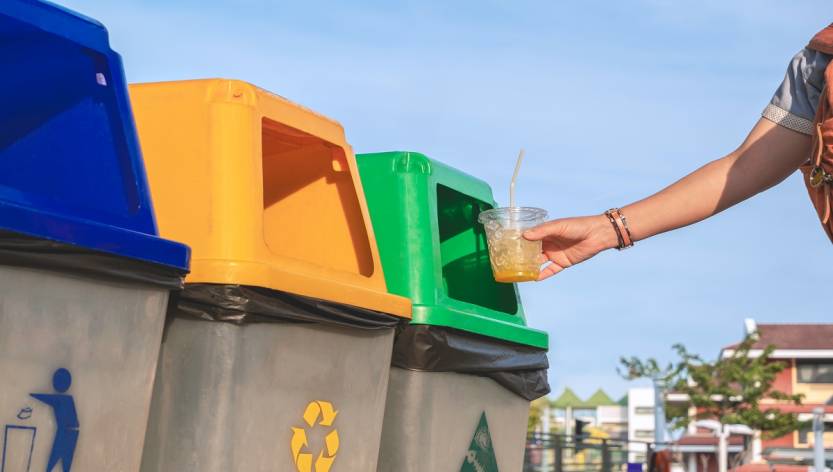
In an era of overflowing landfills and plastic-choked oceans, the demand for cutting-edge waste-disposal solutions has never been more pressing. Introducing the Matarecycler, a revolutionary systemically recycling waste and changing our perspective towards it. Picture a setup in which your normal waste becomes treasure, all thanks to some nifty tech that makes sorting, processing and repurposing it an absolute charm. As a person who has watched piles of discarded stuff in my own backyard mount up over the years, I can’t help but feel at least a spark of hope when I wade into what Matarecycler offers. This isn’t your average recycling app or gadget, but rather an entire ecosystem specifically created to address the world’s waste problem head on.
Cities, businesses and households know all too well that dealing with waste can be a major headache. In many cases the conventional methods are not entirely satisfactory and result with contamination, inefficiency, and environmental pollution. But with Matarecycler, we mean Smart Recycling Tech that is powered by AI, IoT and user friendly interfaces to make sustainability easy for everyone. Whether you’re a parent with no time for compost but lots of children yearning to learn how to be eco-friendly, or a high-powered executive with all sorts of green targets, Matarecycler promises to change the game.
In this deep dive we’ll be covering everything from the problem at the root of waste management to groundbreaking aspects that make Matarecycler so distinct. We’ll dissect how it works, the real-world consequences of S.E.C. rulemaking and what comes next. At the end, you’ll understand why Matarecycler is not only a tool it’s a stepping stone toward a cleaner planet. Let’s dive in.
Table of Contents
- The Evolution of Waste Management: From Landfills to Smart Solutions
- What is Matarecycler? An Overview of the Platform
- Key Features of Matarecycler: The Tech That Makes It Tick
- AI-Powered Sorting System
- IoT Integration for Real-Time Monitoring
- User-Friendly Mobile App
- Community Engagement Tools
- Sustainable Partnerships and Analytics
- How Matarecycler Works: A Step-by-Step Guide
- The Benefits of Matarecycler: Environmental, Economic, and Social Impacts
- Real-World Case Studies: Matarecycler in Action
- Overcoming Challenges: Implementing Smart Recycling Tech
- The Future of Waste Management with Matarecycler
- Conclusion: Join the Recycling Revolution
The Evolution of Waste Management: From Landfills to Smart Solutions
Waste management is not a new problemit’s as old as civilization. Cast your mind back to ancient Rome, where crude systems for collecting and dumping waste existed outside the city walls. Fast forward to the Industrial Revolution and bam now we’ve got huge amounts of waste coming from factories, which brought modern landfills in the 19th century. These “sanitary landfills” were supposed to safely contain trash, but as the population exploded and consumerism took off in the 20th century, they turned into ticking time bombs for environmental disaster.
By the 1970s, an environmental movement took hold and focused on such concerns as pollution and resource scarcity. Recycling programs were started to induce people to sort paper, glass and metals. It was progress, but obstacles remained. Inoculation outside of the process was also a major problem, because non-recyclables got into rendered entire batches worthless and wasted resources and money. Public participation was uneven; not everyone knew what could be recycled, and collection infrastructure was wildly inconsistent from one community to the next.
Enter the digital age. The 21st century introduced smart tech to the mix, turning the waste management chore from reactive into proactive. Sensors in bins monitor fill levels, and this information is used to improve collection and reduce fuel burn and its associated emissions. There are apps that nudge users to recycle, and data analytics to forecast garbage patterns so waste can be better scheduled. But even these improvements tend to have their gaps: They frequently are siloed, costly to apply and fall short of completely addressing contamination or community buy-in.
This Is Where The Real Revolution Begins.
Smart recycling tech the kind at the core of Matarecycler takes these foundations and combines them with AI, machine learning and IoT (Internet of Things) for a more comprehensive system. No more guessing games AI can detect materials with pinpoint accuracy, reducing contamination up to 90% in some systems. These IoT tools deliver data in real time and can make dynamic changes that save both time and money.
Think on the global level: As of recent estimates, the world produces in excess of 2 billion tons of municipal solid waste each year a sum predicted to rise to 3.4 billion by 2050. Conventional means can’t keep pace, which is why when landfills release methane into the atmosphere it becomes a major source of climate change. Smart tech has flipped the script, branding waste as a source of resources with effective sorting and upcycling. This isn’t just about minimizing damage; it’s about maximizing value, both economically and environmentally.
I have seen this change in my own community. Just a few years ago, our nearby recycling center was plagued with overflowing bins and frequent rejections because of contamination. With tech-driven programs, participation has blossomed and so have diversion rates (the percentage of waste that is kept out of landfills). Matarecycler takes this a step further, by offering smart recycling tech that can be deployed at scale. It is the bridge from obsolete landfills to a circular economy, in which materials cycle back into production indefinitely.
And now, as we continue to advance, it is good to have these background details which will allow us all to better appreciate developments such as Matarecycler. It’s not hype; it’s a reality we need to face in our waste-filled world.
What is Matarecycler? An Overview of the Platform
At its core, Matarecycler is a comprehensive waste management platform that leverages smart recycling tech to make sustainability simple and effective. Founded on the principle that technology can solve environmental woes, it combines hardware, software, and community-driven initiatives to revolutionize how we handle waste.
Just imagine: “Instead of throwing everything in a bin and, hoping it will be recycled, Matarecycler gives the user tools to manage, educate and automate the experience.” It’s geared for anyone from households to huge companies providing a scalabe solution for any requirement. Even the name of the platform is suggestive being “material recycler,” in other words, that it can turn raw waste into reusable raw material.
Matarecycler stands out for how it’s designed to be smart. This is not a plain Jane recycling app tracking your habits; it’s a sophisticated system of algorithms designed to interpret waste streams, predict trends and fine-tune every aspect of its work. It’s cloud-based, so data syncs across devices for a seamless experience. Whether you’re scanning a barcode on a plastic bottle or tracking output of a factory, Matarecycler gives you finformations that help you make better decisions.
The platform also gives a lot of importance to user experience. With user-friendly UI and gamification features such as the perks for regular recycling, it makes a boring chore fun. For companies, it is integrated into supply chains for regulatory compliance and ESG (Environmental, Social, Governance) goals.
Matarecycler, in other words, is not just tech; it’s a philosophy. And it’s all about giving people the power to make a difference, one recycled object at a time. With global waste challenges on the rise platforms like this are vital to creating robust and environmentally sound systems.
Key Features of Matarecycler: The Tech That Makes It Tick
The strength of Matarecycler is its rich features, mixing some top-notch tech with real world usability. So let’s dissect a few of the elements that make this game-changing smart recycling tech.
AI-Powered Sorting System
The real star of the show is Matarecycler’s AI-powered sorting system. With machine learning models that have been trained on large datasets, it can recognize materials in seconds such as plastic, metal, paper or organics. This serves to minimize human induced errors caused from contamination rates that can be as high as around 25% for conventional systems.
can be as high as around 25% for conventional systems.
Imagine tossing a used tissue into a smart trash can equipped with cameras and sensors. The items are sorted and tagged by the AI, which sends them hurtling down one of its streams. In trials it has boosted through put by as much as 70%, cutting down waste and increasing recovery. It’s as if you have a recycling pro in your pocket, only it is powered by algorithms that keep getting smarter and better over time.
IoT Integration for Real-Time Monitoring
Matarecycler comes with IOT devices woven into its lining that sense waste levels, collection requirement and environmental impact analysis. Smart sensor-equipped bins also send messages sending users or authorities when they are full so trucks can plan their pick up routes most efficiently and eliminate unnecessary trips — as well as emissions.
For larger operations, like town programs that can mean predictive analytics: forecasting when the most trash will be produced based on historical patterns and data about weather or events. It does more than just react; it proactively saves 30% on logistics costs, not to mention the reduction in carbon footprints.
User-Friendly Mobile App
One is accessibility, which Matarecycler’s app provides. Available on iOS and Android, it includes barcode scanning for real-time recycling info, personalized tips and tracking your progress. Users receive points for their actions — everything from recycling and riding a bicycle to commuting in low-emission cars — and can redeem them at eco-partners for discounts.
The app features educational modules, short videos, quizzes and AR simulations to educate users about recycling. For families it’s a fun way to get kids involved; for businesses, it’s a dashboard for compliance reporting.
Community Engagement Tools
Matarecycler connects people around the world through forums, challenges, and local initiatives. Users can belong to virtual communities where they share tips, plan cleanups or work on projects. This social dimension creates accountability and gives meaning to what we do alone.
The new integration with social media also means that you can share your victories and spread the word. It’s that human touch, which helps keep the tech approachable not scary.
Sustainable Partnerships and Analytics
The platform collaborates with governments, NGOs and companies to create customized solutions. That is where analytics tools come in, delivering waste compositions reports, ROI formulas and sustainability metrics to inform policy and investment.
Matarecycler added to the mix is its blockchain traceability integration, which allows recycled material’s journey to be tracked and proven transparent, tugging at eco-wary brands.
These capabilities together have made Matarecycler a force to be reckoned with in the smart recycling tech that are bridging pain points between innovation and sympathy.
How Matarecycler Works: A Step-by-Step Guide
Curious about the magic behind Matarecycler? Let’s walk through it step by step, as if you’re setting it up yourself.
Step 1: Onboarding and Setup. Download the app or access the web portal. Create an account, input your location, and connect any IoT devices like smart bins. The system uses geolocation to tailor advice to local recycling rules.
Step 2: Waste Input and Scanning. When you have waste, use the app’s camera to scan items. AI analyzes composition e.g., “This plastic bottle is PET-1, recyclable locally.” For bulk, smart bins do the heavy lifting with embedded sensors.
Step 3: Sorting and Processing. The AI sorts digitally or physically. In home setups, it guides you via AR overlays; in facilities, robotic arms handle separation. Data is uploaded to the cloud for analysis.
Step 4: Collection and Logistics. IoT monitors trigger alerts for pickups. Optimized routes ensure efficiency, with partners like local haulers integrated for seamless handoffs.
Step 5: Repurposing and Reporting. Sorted materials go to recycling centers. Users get reports on their impact e.g., “You diverted 50kg from landfills this month.” Analytics help refine habits.
Step 6: Feedback Loop. The system learns from user data, improving accuracy. Community features allow sharing successes, closing the loop.
It’s straightforward yet sophisticated, making smart recycling tech feel like second nature.
The Benefits of Matarecycler: Environmental, Economic, and Social Impacts
With Matarecycler, it’s good for multiple reasons and the effects are seen across all aspects of sustainability.
Environmentally, it reduces the reliance on landfills by improving diversion rates. Less waste means less methane fewer greenhouse gas emissions for the atmosphere. Through upcycling, it saves resources; recycling aluminum, for example, requires 95 percent less energy than making a new batch of cans. Matarecycler cut a city’s carbon footprint by up to 20% in one pilot.
Economically, efficiency reigns. Companies save on disposal costs by being able to consolidate and choose the most efficient mode of logistics, take advantage of recycling opportunities to turn waste into revenue streams. This not only saves governments the cost of expanding landfill, but allows them to redirect those funds elsewhere. Rewards programs at an individual level offset small costs and anyone making the smallest effort in green living can afford to do it.
Socially, it builds community. Tools for learning enable low-access areas to become sustainable equally. Tech and recycling provide job opportunities and resources in local economies. And the personal satisfaction of seeing how your individual impact is making a difference keeps you engaged.
At the end of the day, Matarecycler can also prove that smart recycling tech isn’t just good for the planet, it’s good business and social progress.
Real-World Case Studies: Matarecycler in Action
Some of what Matarecycler could do, see in these examples.
A 60% increase in recycling rates was recorded when implemented in schools in a mid-sized U.S. city. The app was a classroom tool for students in challenges that would divert tons of waste while teaching them about sustainability.
A European manufacturer adopted the IoT sensors and reduced contamination by 85 percent, saving €100,000 a year in fines and fees. AI-driven insights streamlined their supply chain, cutting demand for raw materials.
Smart bins were introduced through NGO partnerships as local government programs provided affordable smart bins that increased participation more than two-fold (from 30% to 75%) in a growing Asian community. Residents have cited how cleaner their streets are and expressed pride in what they said were their eco-efforts.
And these narratives emphasize flexibility, demonstrating Matarecycler’s practical value in a variety of scenarios.
Overcoming Challenges: Implementing Smart Recycling Tech
No innovation is without hurdles. Pricing with IoT hardware is another deterrent, but Matarecycler pricing tier of low to start on basics (to juggle values) would favor the potential customer. And then, of course: Privacy the company says it has encryption in lock down.
Aversion to change is a frequent occurrence, and education modules circumvent this by the use of quick wins. Infrastructure gaps in rural areas? The mobile-first architecture of the platform reduces requirements.
Technical glitches? Reliable thanks to continuous updates and assistance. Matarecycler makes adoption a breeze, working from the get go.
The Future of Waste Management with Matarecycler
Down the road, Matarecycler is planning to expand into AI applications such as predictive waste modeling and VR training. Global collaboration will amplify impact as it relates to UN Sustainable Development Goals.
Recycling, as smart cities emerge, will be integrated into the urban systems so that it becomes fluid space practise! The future? A world in which waste is a resource, not a burden, because of tech like this.
Conclusion: Join the Recycling Revolution
Matarecycler is less tech and more it’s a driver for change. Smart recycling can help us secure a sustainable future. Ready for a waste management game changer? Get into Matarecycler today and be part of the solution.
Read More: Sofoximmo: Guide Transform Property Management & Investments