
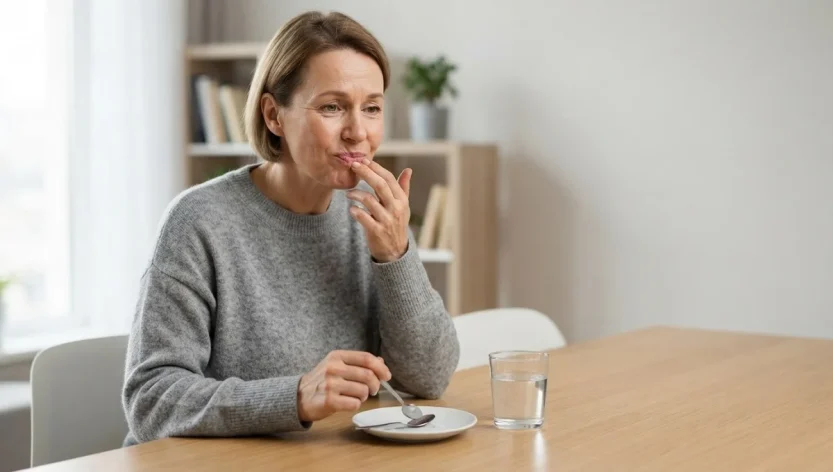
Coffee tasting like coins. Water that suddenly seems off. That foil-on-a-filling zing, except you have not eaten foil and nothing is wrong with your teeth, as far as you can tell.
A metallic taste in the mouth is one of those symptoms that feels bigger than it usually is. Dentists and GPs see it all the time. The NHS is blunt about it: it is not usually serious, and what you do depends on the cause.
Most people can trace it to something ordinary. A new antibiotic. Zinc lozenges for a cold. Gums that bleed when they floss. A blocked nose. Heartburn. Early pregnancy. The taste tends to leave when that cause does.
It can be something you should not ignore. Kidney failure, a severe food allergy, pesticide or mercury exposure. Those are the exceptions, and they almost never show up as a funny taste with nothing else attached. If you otherwise feel fine, start with the boring explanations.
This is general information, not a diagnosis.
What you are actually tasting
The medical name is dysgeusia, which just means taste has gone sideways. Food can seem metallic, bitter, rancid, or salty. Sometimes the taste sits there even when your mouth is empty.
Flavor is a mash-up. The tongue handles five basics: sweet, sour, salty, bitter, and umami. Smell does most of the rest. Temperature and texture pile on. The National Institute on Deafness and Other Communication Disorders keeps having to explain this: a lot of people who think they have lost their sense of taste have a smell problem. A cold plugs the little passage between the throat and the nose. Coffee still hits the tongue. It just does not smell like coffee, so the brain files it under “wrong.” Metallic is one of the ways “wrong” comes out.
A few different things can produce the same penny taste.
Blood from inflamed gums has iron in it. Iron tastes like metal because it is metal. Some drugs leave the body partly through saliva, so you taste the medicine itself. Zinc, copper, and chromium from supplements land on the tongue. Stomach acid that creeps up overnight leaves a sour-metallic film. In advanced kidney disease, urea builds up and gets into saliva; bacteria turn it into ammonia. Completely different machinery. Same complaint.
True loss of taste, ageusia, is uncommon. A warped taste is not.
NIDCD figures put some scale on it. Almost 1 in 5 Americans over 40 report some change in taste. About 5% of adults in that age group report distortions, and bitter or metallic is the usual flavor of those distortions. More than 200,000 people a year see a doctor for taste or smell trouble.
Start with the medicine cabinet
If the taste showed up in the last few days or weeks, look at what you started taking.
Antibiotics are famous for this. Metronidazole is the one patients mention by name. Clarithromycin and tetracycline do it too. Metformin, which a lot of people take for type 2 diabetes, is excreted into saliva. ACE inhibitors for blood pressure, especially captopril, have a long reputation for a metallic aftertaste. So do lithium, the gout drug allopurinol, the glaucoma drug methazolamide, and zopiclone, a sleeping tablet the NHS flags specifically. Some antidepressants and antihistamines get there by drying the mouth out. Chemotherapy drugs are in a category of their own.
The pattern is fairly consistent. The taste starts after the drug starts. It eases when the drug is stopped or swapped. Do not stop a prescribed medicine because your coffee tastes like nickels. Call the pharmacist or the person who wrote the prescription and ask if a substitute exists.
Then look at the supplements. Multivitamins with zinc, copper, or chromium. Iron tablets. Calcium. Prenatal vitamins. Zinc lozenges you bought for a cold. Cleveland Clinic notes that the taste often fades as the body processes the dose. If it does not, check whether you have stacked zinc from three different bottles.
Zinc is awkward here. Too little of it can blunt taste. Too much of it can cause the metallic taste you are trying to fix. The NIH upper limit for adults 19 and older is 40 mg a day from food and supplements combined. High doses over time can also drain copper. And skip zinc gels or sprays that go in the nose. Mayo Clinic has warned that intranasal zinc has been linked to loss of smell, sometimes lasting.
If you added a new pill or powder and then the penny taste arrived, that is your first lead.
Then look in your mouth
Bleeding gums are an underrated explanation. Gingivitis and periodontitis make gums leak. The iron in that blood is the metallic taste. A tooth infection can do the same. So can a mouth that has not had a proper cleaning in two years.
The National Institute of Dental and Craniofacial Research has a practical note that does not get repeated enough: brushing or scraping the tongue, plus a professional cleaning to get tartar off the teeth, has been shown to improve taste. If your gums bleed, your breath has changed, or you cannot remember your last dental visit, go there before you spiral into rare diseases.
Dentures that do not fit, ulcers, and appliances that sit over the soft palate can mute or twist flavor. After new metal fillings or crowns, some people get a brief battery-like taste. Saliva plus two different metals can set up a tiny galvanic current. It is usually more startling than dangerous, and it often settles. A fork or a bit of foil hitting a metal restoration can give you the same zap for a second.
Tobacco dulls and distorts taste on its own. Quitting helps, though not always on a neat timetable.
Dry mouth belongs in this group even if your teeth look fine. Saliva carries flavor to the taste buds. Cut the saliva and food goes metallic, salty, or just blank. Medicines are the usual reason, along with mouth breathing at night and, less often, conditions like Sjögren’s. Among adults 40 and older who reported persistent dry mouth, about 43% also noticed taste changes, per NIDCD data. Water, sugar-free gum, a humidifier, and a conversation about whether a drug is drying you out are more useful than mouthwash that burns.
Colds, COVID, reflux, pregnancy
A stuffed nose is doing more work than it gets credit for. Colds, sinus infections, allergies, middle-ear infections, and COVID-19 all scramble smell, and smell takes flavor with it. Postnasal drip sits on the tongue. Congestion blocks aroma. The taste usually tracks the illness. When you can smell the coffee again, the metal often goes with it.
COVID is a known exception on timing. Cleveland Clinic clinicians have said a COVID-related metallic taste can hang around for weeks or months after the rest of the infection has gone. Annoying. Not, by itself, a sign of damage you failed to notice.
Acid reflux is the morning version of this problem. Stomach contents creep up overnight. You wake up with a sour or metallic film, sometimes a lump-in-the-throat feeling, sometimes heartburn that you have been calling indigestion for a year. Smaller evening meals, not lying down after eating, raising the head of the bed, and actual treatment for reflux if a clinician recommends it. The NHS line is simple: treat the indigestion and the taste should go.
Pregnancy is hormones. Some people get pickles. Some people get a sour-metallic taste that will not leave, even between meals. It is typically loudest in the first trimester and often fades later, which is what Cleveland Clinic’s Dr. Donald Ford has described. Prenatal vitamins, iron in particular, can add their own metallic note. Do not drop the vitamins without asking. Cold food, tart food, and smaller snacks are usually easier than a hot plate of meat. A metallic taste is not a pregnancy test, and it is not a warning that the pregnancy is going badly.
The causes people worry about first
These are real. They are also not the default.
Kidneys. When kidneys stop clearing waste, urea builds up, reaches saliva, and gets broken down into ammonia. People describe metal or urine on the breath. Cleveland Clinic lists a metallic taste among the symptoms of uremia, which shows up in advanced kidney failure, not as a first whisper of mildly off labs. You would expect company: swelling, itching, nausea, unusual fatigue, urine changes, shortness of breath, weight dropping without trying. The taste plus that cluster needs a doctor. The taste plus a new bottle of zinc lozenges does not.
Diabetes, liver disease, thyroid trouble, low B12 or zinc. Metabolic conditions can warp taste. Metformin can do it even when diabetes is otherwise quiet. B12 deficiency may bring fatigue, pallor, and tingling in the hands or feet along with the taste change. Blood tests sort this. Guessing at supplements does not.
Chemo and radiation, especially to the head and neck. Patients call it chemo mouth. Red meat is a frequent offender because of the iron. Plastic or wooden utensils instead of a metal fork, colder food, ginger, citrus, spices, boiled sweets: that is the NHS advice, and it is the advice oncology dietitians have been giving for years. Taste often returns after treatment. The timeline is sloppy. Do not start high-dose zinc on a forum’s recommendation. The research is mixed, and extra zinc can make the metal worse.
Chemicals and metals. Insecticides. Lead in old paint dust, some imported pottery or cosmetics, contaminated water. Mercury vapor from a spill (never vacuum it). Welding fumes. Cleveland Clinic’s advice is to get medical help promptly after that kind of exposure. Elemental mercury in the lungs is not a wait-and-see taste problem. It can come with cough, breathing trouble, nausea, and bleeding or swollen gums.
Nerves and brain. Head injury, middle-ear surgery, wisdom-tooth extraction, and some neck operations can scramble the nerves that carry taste. Alzheimer’s, Parkinson’s, and multiple sclerosis are associated with dysgeusia. Aging dulls taste buds on its own. Dementia can speed that up because the wiring on the brain side is failing, not just the buds.
A severe allergy. This is the one that should change your evening. A metallic taste can be an early sign of anaphylaxis, particularly with shellfish or tree nuts. If it arrives with hives, swelling of the lips or tongue, wheeze, dizziness, or that sudden sense that something is very wrong after eating, use epinephrine if you have it and get emergency care. Do not finish the meal to see if it passes.
Burning mouth syndrome sometimes travels with dysgeusia. Painful burning on the tongue or in the mouth, more often reported by middle-aged and older women, per the NIDCD. Worth naming so it does not get dismissed as “just stress.”
What to do with it
Match the response to the story.
If you started metronidazole on Tuesday and the penny taste showed up Wednesday, you already know. Ask whether you need the full course and whether anything else is an option. Same logic for a new blood pressure pill, metformin, or a prenatal vitamin.
If your gums bleed, book the dentist. Brush, floss, scrape the tongue. A rinse of half a teaspoon of baking soda in a cup of warm water before meals is a cheap trick a lot of people actually use. Salt water if baking soda bothers you.
If you cannot smell dinner from the kitchen, treat the nose. Allergies, a sinus infection, a lingering cold. The taste is a passenger.
If you have heartburn, treat that.
And if none of those fit, or the taste has outlasted a short illness, get it looked at. The NHS threshold is reasonable: see a GP if it does not go away, or if there is no obvious cause.
While you are sorting it, eating still has to happen.
Metal cutlery makes some people worse. Plastic, wood, or ceramic is an easy swap. Heat can amp up the taste, so leftovers from the fridge sometimes go down better than the same food hot. Tart helps more than sweet for a lot of people: lemon, lime, pickles, a vinegar dressing. Ginger and herbs beat piling on salt. If red meat is inedible, that is not a reason to skip protein. Eggs, yogurt, beans, chicken, tofu. Brush or rinse right before a meal. Sugar-free gum or mints can get saliva moving if your mouth is dry. Water, often. Room-temperature still water is the one that tastes most like a tap pipe for some people. Cold or citrus-cut water is easier.
None of that fixes the cause. It gets you through dinner.
A few things that make this last longer than it needs to. Taking extra zinc “for taste.” Stopping a needed drug without a plan. Treating it as a mouth problem when you have not been able to smell anything for a week. Waiting on a metallic taste that showed up with hives, or after spraying insecticide in a closed garage.
When it is not something to sit on
Make an ordinary appointment if the taste persists, has no clear source, or is getting in the way of eating and drinking.
Go sooner if you also have swelling in the legs, a big change in urination, yellowing of the skin or eyes, vomiting you cannot explain, weight loss, or new numbness, tremor, or confusion.
Get urgent help if the metallic taste comes with swelling of the lips or throat, trouble breathing, or a suspected chemical exposure. Chest pain, fainting, vomiting blood: same category, obviously, whether or not the mouth tastes like pennies.
A workup, if you need one, is usually unglamorous. Dental exam. A list of every pill, powder, and lozenge. Blood tests for kidney and liver function, blood count, glucose, B12, iron, sometimes zinc. An ENT if smell or nerve injury is in the picture. Formal taste testing exists. It is not the first move.
Bring a timeline. “Started after the antibiotic” is worth more than “my mouth tastes weird.”
Common questions
How long does it last?
As long as the cause does. A lozenge might be hours. An antibiotic, the length of the course plus a little after. A cold, days to a couple of weeks. Pregnancy, often the first trimester. COVID, sometimes much longer. Chemo, through treatment and into recovery, with a messy landing.
Why is it worse in the morning?
You swallow less at night. Mouth breathing dries you out. Reflux has hours to creep up. Brush, rinse, drink some water sitting up. If mornings are always metal plus heartburn, that is reflux until proven otherwise.
Can dehydration do it?
Yes, by drying the mouth. Drink. If you are still parched after that, the dryness has a cause of its own.
Should I take zinc?
Not by default. Deficiency can hurt taste. Extra zinc can cause the metallic taste, and long-term high doses can deplete copper. Get a level checked if a clinician thinks it is relevant. Do not stack cold lozenges on a multivitamin and call it treatment.
Is this a sign of cancer?
A metallic taste by itself is a poor cancer signal. Cancer treatment, especially chemo and head-and-neck radiation, causes it often. The disease itself, without other symptoms, is not where to start. Unexplained weight loss, a lump, swallowing trouble, or a mouth sore that will not heal: those are separate reasons to get seen, taste or no taste.
Could I be pregnant?
You could. Take a test if that is on the table. Do not use a metallic taste as the test.
Does anxiety cause it?
Not in the way metronidazole does. Dry mouth from stress can make an existing taste louder, and paying attention to your tongue all day will not make it quieter. A new, persistent metallic taste still deserves a dental or medical once-over rather than a shrug.
If you want one thing to do today: put every medication and supplement on a piece of paper, look at your gums in good light, and notice whether you can still smell. That trio solves more of these than any mouthwash will.