
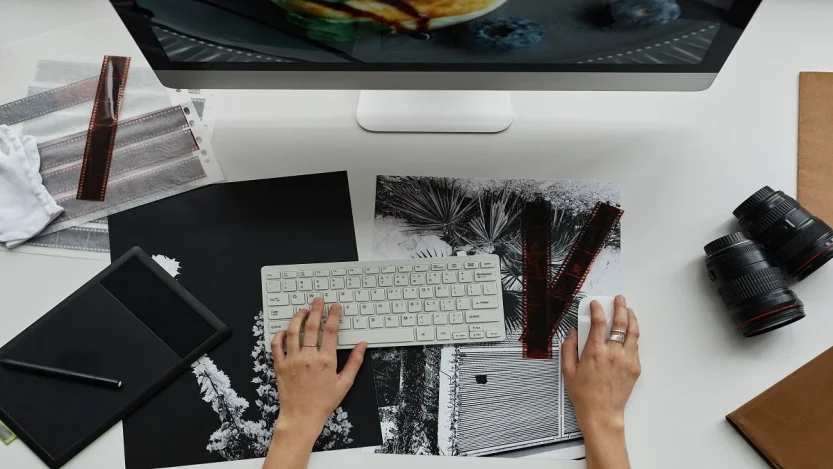
Having a blank space as your canvas is long a gone way to start when making visual content. You can sketch an idea “on the go” with speech, design a concept visually and make it better using the potentially enhanced AI image tools. Consequently, everyday creative work is being done differently by marketers, designers, bloggers & companies.
From Written Ideas to Visual Concepts
Subject, location, style, lighting, and mood are just a few elements that can shape a state-of-the-art AI image generator from text into visuals.
This will help if one has a definite concept but not so nice image to pair with it. It takes longer than searching through a billion stock libraries or laying down a few frames to build an initial concept, but users have the option of trying many approaches before settling on what works best.
The end product is not necessarily the final design. AI-generated graphics can also serve preliminary drafts, references, or starting points for editing
Why Conversational Image Creation Matters
It is also getting easier to refine newer image-generation algorithms using natural language. By providing more detailed instructions, tools like GPT Image 2.5 let users go beyond a single prompt and keep refining a concept.
Users often want to change the background, add soft lighting, or make the composition more minimalist after generating a product scenario.
This workflow makes image creation more iterative, rather than one-way.
Better Prompts Can Produce Better Results
AI image tools still depend heavily on the instructions they receive.
While a brief instruction might produce an acceptable image, providing additional information often helps the algorithm understand what to do.
Useful Details to Add
Some examples of good prompts are:
- The key idea
- Context or setting
- Environmental lighting
- Viewfinder position
- A color scheme
- Design aesthetic
- State of mind
It should be noted here that the length of each prompt shouldn’t really be that long. It helps in including the bits of information regarding the product that is lifesaving.
AI Can Speed Up Early Creative Work
A major advantage of AI image production is the ability to run experiments quickly.
The marketing team may need different types of images based on the campaign. Let say a blogger is writing an article and looking for some unique image to go with it. Prior to doling out money for an actual design, a smaller business may want to start with a draft.
AI lets these users explore options quickly.
You can experiment with various designs and color schemes, as well as backdrops if possible so that you define your options instead of jumping to conclusions.
Human Review Is Still Necessary
AI-generated visuals can appear quite convincing, though they may not always be realistic,
Fine details can appear distorted. Images may contain incorrect text. At times, reflections or proportions may look unrealistic.
Because of this, human review remains important, particularly for commercial purposes.
Users are advised to verify the following before sharing an image:
- Fits the name/brand
- Represents the intended message
- Displays a unified appearance
- Keeps information from becoming deceptive
- Is appropriate for the intended audience
An image’s suitability is not determined by how pleasant it looks.
Responsible Use Should Remain Part of the Process
Users must still use caution with AI image tools, even though these tools can foster creativity.
When they can mislead an audience, generated graphics should not be displayed as genuine pictures. When using photographs for commercial purposes, businesses should review the terms of use for the products they use.
Rather than supplanting human judgment, AI is most effective when it fosters human ingenuity.
FAQs
Can text prompts create realistic images?
Although you still need to scrutinize results, there are now a few AI technologies that can create seemingly realistic graphics.
Are AI-generated images useful for marketing?
Yes. They can help with campaign ideas, social media posts, initial concepts, and visual exploration.
Do detailed prompts improve image quality?
Most of the time, yeah. For more reliable results provide detailed guidance on style, theme, lighting and composition.
Final Thoughts
Text-based generated visual is a more flexible and faster way of producing images. By pairing textual directives with rapid experimentation, creators can prototype enough ideas before committing to a path. Human inspection is still needed to keep things accurate, relevant and visually appealing.