
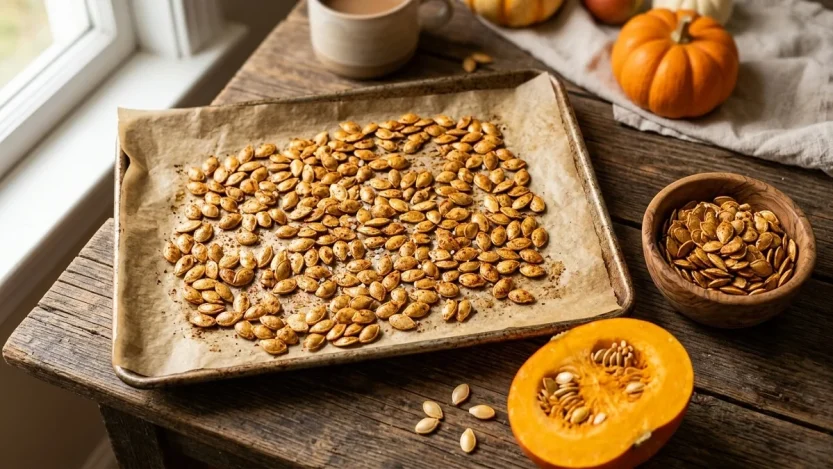
Pumpkin seeds are easy to roast. Clean the seeds thoroughly, dry them thoroughly, toss them with a little oil and salt, and roast them in a single layer. In a home oven, they usually take about 15 to 45 minutes at 300 to 350 degrees Fahrenheit (150 to 175 degrees Celsius). This time depends on the speed of the oven and the number of seeds in the tray. Lower temperatures take longer, but the seeds will be evenly golden. Higher temperatures work faster, but you have to keep an eye on the seeds.
This article explains how to roast the seeds, what temperature to choose, how to tell when they are done, and what to do if the seeds are too hard to chew or burnt. These are general rules for home cooking, not laboratory-tested numbers. So use the times given as a starting point and adjust them to your oven.
Quick Answer: Temperature and Time
| Method | Oven temperature | Approximate time | Better for whom? |
|---|---|---|---|
| Low heat, long time | 300°F (150°C) | 30 to 45 minutes | Uniform color and more dry crispness |
| Medium | 325°F (165°C) | 30 to 45 minutes | Balance speed and control |
| Fast | 350°F (175°C) | 15 to 20 minutes | Small amount, which can be continuously monitored |
Stir the seeds every 10 to 15 minutes on low heat, and check on them a little earlier than you think. The seeds go from golden to bitter very quickly in the last few minutes.
How to Prepare Pumpkin Seeds Before Baking
Preparation before baking has as much of an impact on the texture of the seeds as oven temperature.
Remove the pulp
Remove the seeds from the pumpkin and place them in a pot of water. The seeds will usually float to the surface of the water, while the fibers and pulp can be separated by rubbing them with your hands. Finally, the remaining pulp is cleaned in a sieve. It is okay if a little pulp remains, and some people like the taste. However, the long fibers can burn in the oven.
Decide whether to boil first
Some recipes call for boiling the seeds in salted water for about 10 minutes before baking. The idea is to allow the salt to penetrate the seeds and soften the skin a bit. This step is not mandatory. Unboiled seeds will still be crunchy, so skip it if you want to save time.
Dry the seeds completely
This step largely determines whether the seeds will be soft or hard to chew. Dry the seeds thoroughly with a clean kitchen towel, and leave them there for a while if you have time. Wet seeds are steamed rather than roasted in the oven, which leaves them hard.
Baking Pumpkin Seeds in the Oven: Step by Step
- Preheat oven. Set oven to desired temperature and place rack in center.
- Mix seasonings into dried seeds. A rough guide is 1 to 2 teaspoons of oil and about 1/2 teaspoon of salt per cup of seeds. Olive oil, avocado oil, or melted butter can be used. Mix enough to lightly coat each seed.
- Spread seeds out. Use a rimmed baking sheet, lined with parchment paper if desired, and arrange seeds in a single layer. If seeds are stacked on top of each other, moisture will trap in and the color will be delayed.
- Bake, stirring occasionally. Stir the seeds every 10 to 15 minutes to ensure even roasting.
- Check for doneness. The seeds should look lightly golden and smell like roasted nuts. Remove a seed, let it cool for a minute, and taste. It should crackle rather than crack.
- Let cool on the tray. The seeds become more crunchy as they cool, so let them come to room temperature, then taste or store.
Which Oven Temperature Works Best?
No one temperature is right for everyone, as ovens and seed sizes vary. Here are the pros and cons of each choice:
- About 300°F: The mild heat dries the seeds slowly, so it’s good for larger quantities and reduces the risk of burning. The downside is that you have to wait longer.
- About 325°F: This is a reasonable middle ground if you’re not sure where to start.
- About 350°F: The seeds color quickly and have a deeper roasted flavor. But they need to be watched closely, and small or thin seeds can burn.
If your oven is getting too hot or some parts are getting too hot, rotate the tray halfway through. An inexpensive oven thermometer can tell if the temperature on the dial is the same as the actual temperature.
Seasoning Ideas for Baked Pumpkin Seeds
Plain salt is also good, but the seeds easily accept other flavors. Add dry spices before baking, and save the sweet stuff for the last few minutes, as sugar burns quickly.
- Spicy: Garlic powder, smoked paprika, cumin or cayenne
- Herbs: Dried rosemary or thyme with a pinch of black pepper
- Sweet: Cinnamon and a pinch of sugar, sprinkled after baking
- Sour: A dash of Worcestershire sauce mixed with oil
Start with a small amount of spice, about a quarter to a half teaspoon per cup of seeds. Next time, increase the amount if you want a stronger flavor.
Why Pumpkin Seeds Turn Out Chewy or Burnt
Most problems arise for a few reasons.
Hard or rubbery seeds are usually a sign that they have moisture left in them. The seeds may not have been dried properly, too many seeds were placed in the tray, or they were taken out of the oven too quickly. Put them back at 300°F for another 5 to 10 minutes and check again.
Burnt or bitter seeds are usually caused by high heat, thin seeds sticking to the sides of the tray, or too long between stirring. Next time, lower the temperature and stir more often.
Uneven roasting occurs when seeds of different sizes are baked at the same time. If you have seeds that are both thick and thin, try the smaller seeds first, as they cook faster.
Seeds that are crunchy but hard to chew may simply be due to the thick skin. Large pumpkin seeds have a white skin that is edible but fibrous. Some people like to eat the seeds with the shell, and some crack the shell and eat just the kernel inside.
Carving Pumpkin Seeds vs. Pepitas
The seeds that come from a carving pumpkin have a white, papery skin. Pepitas are the flat green seeds found in stores, and they come from varieties of pumpkin that have no or very thin skins on their seeds. Pepitas roast very quickly, often in less than 15 minutes, so keep the time short when baking them.
How to Store Baked Pumpkin Seeds
Let the seeds cool completely, then store them in an airtight container at room temperature. If you store them in a warm place, the steam will create moisture and the seeds will soften. The seeds contain natural oils, so their flavor may deteriorate over time. They will stay fresh for about a week if stored in a cool, dry place. For longer storage, the freezer is a good choice.
Nutrition: What Pumpkin Seeds Contain
Pumpkin seeds are a source of protein, fiber (when eaten with the skin), unsaturated fats, and minerals such as magnesium and zinc. For accurate nutritional information per serving, check the USDA FoodData Central database. These numbers vary depending on whether the seeds are shelled or unshelled, and how they are prepared. Oil and salt added on top will change the total amount, so if you are counting sodium or calories for medical reasons, check the numbers in your recipe or consult a registered dietitian.
Frequently Asked Questions
What temperature is best for baking pumpkin seeds?
A good range is 300 to 350 degrees Fahrenheit. Lower temperatures like 300°F roast the seeds more evenly and reduce the risk of burning, while 350°F is faster but requires careful monitoring.
How long does baking pumpkin seeds in the oven take?
It takes about 15 to 20 minutes at 350°F and 30 to 45 minutes at 300°F. Start watching early and stir regularly, as the time varies with the strength of the oven and the amount of seeds.
Do I need to boil pumpkin seeds before baking?
No. Boiling in salted water for about 10 minutes is an optional step that some people do for flavor. If the seeds are thoroughly dried before going into the oven, they will still turn into crisp seeds without it.
Do I have to remove the shells?
No. The white skin of pumpkin seeds is edible, and many people eat the seeds whole. If you don’t like the texture, you can crack the skin and eat the kernel inside.
How do I know when baked pumpkin seeds are done?
The seeds should be lightly golden and have a roasted aroma. Remove one seed, let it cool for a minute, and taste it. If it crackles, it’s ready.
Why are my baked pumpkin seeds chewy?
The most common cause is moisture. Dry the seeds thoroughly, spread them out in a single layer, and bake for a little longer if necessary.
How long do baked pumpkin seeds last?
They keep best at room temperature in an airtight container for about a week. Storing them in the freezer extends their shelf life.
Final Result
Baking pumpkin seeds well depends on three things: dry seeds, a single layer, and a temperature you can control. For consistent results, start at 300°F to 325°F, stir frequently, and test the doneness by tasting a cooled seed before declaring it done. Once you find the right method for your oven, it’s much easier to try new seasonings every time.