
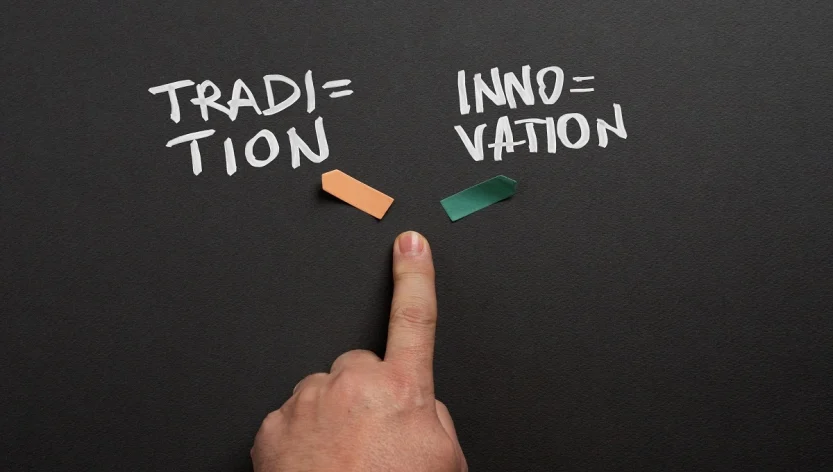
Organizations need to adapt quickly or become obsolete in a world where market dynamics can change overnight. Traditional way of building enterprise agility is framework driven. But, real innovation for modern times starts with thoughtful yet systematic disassembly of the past. Enter the concept of Levapioli.
Leaders have to learn how to “pry away” the legacy processes, inflexible hierarchies and tech debt grounds their teams while not breaking the essential culture of the business to do it properly.
Table of Contents
- Introduction: The Levapioli Mindset
- What is the Levapioli Metaphor?
- The Core Pillars of Modern Agility
- Dismantling Legacy Systems Without Damage
- Fostering an Innovative Culture
- Measuring Agile Success
- Frequently Asked Questions (FAQs)
- Conclusion: Pulling the Pin on Stagnation
What is the Levapioli Metaphor?
Mechanically, a levapioli translates from Italian into what amounts to a safety tool with springs created to release clips, pins and fasteners from complex groupings of structures in automobiles. With sufficient care, a panel won’t break but if you tug a little too hard, you’ll simply break the plastic and demolish the frame. Used correctly, it comes off cleanly and provides access to the engine below.
Your organization is masked by the business “pins” of:
- Bottleneck in approvals: Middle management that slows fast decision-making.
- Data silos: Departments keeping data to themselves rather than sharing it between cross-functional teams.
- No one goes broke keeping: Tech debt → Old software that is cheaper to maintain than replace
The Levapioli method of timely innovation is precision removal. It is finding the precisely right place of organizational friction and applying focus levers to dissolve with a safe force that will not otherwise destroy the company.
The Core Pillars of Modern Agility
This mindset can be achieved by organizations relying on three main pillars which in turn fuel and enable modern day agile transformation.
1. Cross-Functional Autonomy
Innovation does not exist in a vacuum. Agile organizations make use of cross-functional pods that only include the team members with all of the skills (engineering, design, marketing and product management) to move an idea from inception to production. You take away “managerial pins” slowing down time-to-market by letting those teams make decisions.
2. Iterative Value Delivery
Instead of spending two years building out a “perfect” product in secret, modern agility depends during the Minimum Viable Product (MVP). You get out there early, you collect real customer feedback, and you iterate. It lowers the risk, and guarantees that capital will only spend on features consumers actually want.
3. Psychological Safety
An innovative culture needs the right conditions where failure is accepted as data. Employees will live in fear that they will be scolded, for failure in an experiment. Therefore will never take the real risks needed to change the market. The secret to removing friction is psychological safety
Dismantling Legacy Systems Without Damage
Just as a mechanic uses a levapioli to preserve the integrity of a vehicle’s body, enterprise leaders must carefully manage the transition from legacy systems to modern architecture.
| Strategy | Traditional Approach (Brute Force) | Agile Approach (Precision Leverage) |
| Tech Upgrades | The “Big Bang” replacement, halting operations. | The “Strangler Fig” pattern: gradually migrating components to the cloud. |
| Process Change | Top-down mandates and company-wide overhauls. | Pilot programs in specific departments, scaling based on success. |
| Skill Gaps | Firing old staff and hiring entirely new teams. | Upskilling existing talent who already understand the core business domain. |
Fostering an Innovative Culture
Innovation is not a software suite you install; it is human behavior you foster. At the heart of creating a talent-driven, highly responsive organization is leadership and leadership is more about facilitation than dictation.
- Shift from Outputs to Outcomes: Stop measuring success by how many features a team ships (outputs). Start measuring success by how those features move the needle on customer satisfaction or revenue (outcomes).
- Implement Continuous Discovery: Instead of doing customer research once a year, integrate user interviews into the weekly workflow of product teams.
- Decentralize Strategy: Provide a clear “North Star” metric for the company, but let the individual teams decide the best tactical route to reach it.
Measuring Agile Success
How do you know if your organization is actually becoming more agile, or just performing “agile theater”? Look at these key metrics:
- Move from Outputs to Outcomes: This is about not measuring how many features a team ships (outputs). Instead, start measuring success by how those features impact customer satisfaction or revenue (outcomes).
- Continuous Discovery: Move from once-a-year customer research to finding time every week for user interviews.
- Decentralize Strategy: Have a clear overarching “North Star” metric or purpose for the company but allow teams to determine their tactical path to achieve it.
Improvements in these four metrics are the strongest indicators of a highly functioning, innovative engineering and product culture.
Frequently Asked Questions (FAQs)
Q: Does that mean with the Levapioli mindset we need to fire middle management?
A: Not at all. It means redefining their roles. Rather than behaving as the key-holders to accept or reject decisions, middle managers need to become enablers who eliminate obstacles and facilitate cross-functional teams in capturing the resources they require.
Q: If we push for speed and iterative releases, how do we keep up the quality?
A: Speed and Quality are not for a Trade Off. In fact, breaking large releases into smaller and more frequent updates makes them less risky. It is easier to test something small, monitor it, roll it back if things go wrong.
Q: We have legacy technology around for decades. Where do we even start?
Q: Where to start, first with one approach you would recommend A= The strangler fig method Pick one atomic part of your legacy system that causes too much friction or that needs you to constantly work on it. In a current environment, simply rebuild that one component and direct traffic to it. When it works, go to the next one.
Q: How long does an agile transformation take?
A: Agility is not a project with termination-date, it is an ever-consuming state. Cross-functional autonomy yields an incremental return on investment, but organizations often begin to realize measurable positive impact on deployment frequency and employee morale within the first three to six months of rollout.
Conclusion: Pulling the Pin on Stagnation
Analogy of Lefavioli reminds us, that innovation isn’t about more — more software, more processes, more people. In many cases, faster route to agility is subtraction. This is evident as you carefully identify the bottlenecks, silos, and legacy mindsets that pin your company down. Then by releasing those binding factors you set free the natural speed and creativity of your teams.