
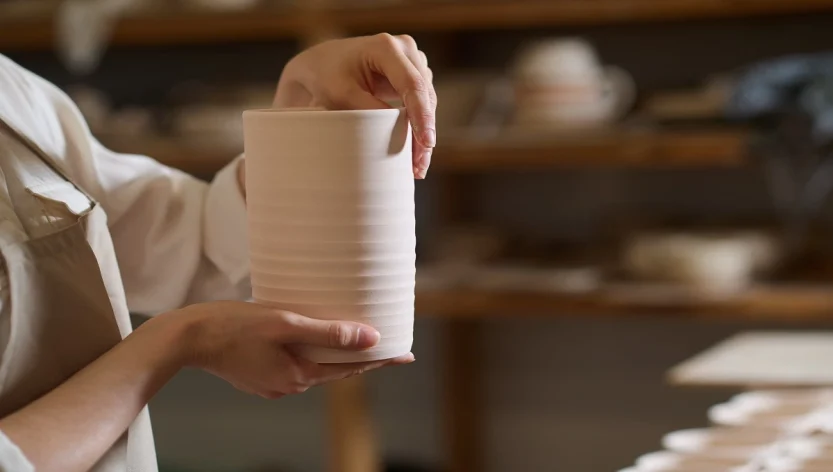
Sodiceram Have you ever stepped into a kitchen that has magnificent-looking countertops but begins to show stains, chips or cracks in just a few years? Or laid gorgeous floor tiles to see them soak up excess water, lose their lust and fight temperature shifts? Traditional ceramics have been good to us for centuries, but they come with limitations that modern life quickly throws in sharp relief — porosity, brittleness, a high energy demand during production and upkeep headaches.
Most recently a shiny new permeability-boosting system known as Sodiceram (for sodium enhanced ceramic) has arrived on the scene, subtly transforming the industry. By combining organic sodium compounds effectively into the ceramic mix, Sodiceram offers a denser stronger more versatile material that is superior than traditional options in terms of durability aesthetics sustainability and everyday performance. Launched into prominence around 2025, through advancements in material science, l it isn’t just a simple tile or surface anymore its an intelligent future-ready choice for homes and businesses as well as industrial applications.
So, in this mega tutorial (with all the SEO-friendly goodness: clear format, perfectly integrated keywords, long-form content) about Sodiceram features and benefits: Sodium Enhanced Ceramics. Whether you’re a homeowner or designer, builder or industry professional, learn about this trendsetting material’s growing presence at the top of projects all over the globe. Let’s dive in.
Table of Contents
- What Is Sodiceram?
- The Science Behind Sodium-Enhanced Ceramics
- Key Features of Sodiceram
- Major Advantages of Sodium Enhanced Ceramics
- Sodiceram vs. Traditional Ceramics and Other Materials
- The Manufacturing Process of Sodiceram
- Versatile Applications Across Industries
- Sustainability and Environmental Benefits
- Installation, Maintenance, and Care Tips
- Real-World Case Studies and Success Stories
- The Future of Sodiceram and Sodium-Enhanced Ceramics
- Frequently Asked Questions (FAQs)
What Is Sodiceram?
Sodiceram is a state of the art ceramic material developed to include sodium-based compounds (mainly sodium oxide, sodium silicates or sodium feldspar derivatives) incorporated into the basic formulation. The name cheekily fuses “sodi” (for sodium) with “ceram” (for ceramics), but at heart is a nod to its biggest innovation: deploying sodium in not just small doses, but as the performance elite.
At its core, Sodiceram is made from the same raw materials that underpin traditional ceramics — premium-grade clay, feldspar, silica (quartz), and alumina — but the inclusion of 3–7% sodium compounds alters this through-process. The sodium elements serve as active fluxes throughout the firing process, leading to better vitrification (the process in which particles bond and form a glass-like structure). The result? A material with porosity down to ≈≤0.5% (vs 1–3% or more for normal ceramics), with ultra-high density and a bastion microstructure that feels like premium under fingers and performs like a champ when stressed.
Sodiceram is not just a basic porcelain or earthenware tile that you would find at your local hardware store, it’s purpose-built for today’s demands. It came out of European and international materials science labs around 2025, leveraging centuries of ceramic mastery re-engineered to beat (at the same time) energy inefficiency, moisture susceptibility and design restrictions. Offered in tiles, slabs, panels and custom forms, it mimics natural appearances (marble, wood, stone, concrete) or delivers bold modern finishes—matte and satin as well as polished or textured grip surfaces.
Consider this analogy: If regular ceramics are like a good old family sedan, Sodiceram is the sporty electric vehicle slicker, stronger, and more efficient with an all-around range for the long journey. Homeowners in humid climates love its resistance to mold; architects adore its lightweight, strength for facades; and manufacturers appreciate the reduction in production footprint.
The Science Behind Sodium-Enhanced Ceramics
To truly appreciate Sodiceram, you need to understand the clever chemistry at play. In ceramics, “vitrification” is the magic moment when heat turns a powdery mix into a solid, glassy structure. Sodium compounds serve as powerful fluxes substances that lower the melting point of silica and alumina, allowing particles to fuse more completely at lower temperatures (typically 1150–1250°C instead of higher for standard bodies).
Here’s what happens on a microscopic level:
- Flux Action: Sodium oxide (Na₂O) reduces the viscosity of the molten glass phase, helping it flow into gaps between crystalline grains. This creates an interconnected glassy matrix that “glues” everything together tightly.
- Densification and Porosity Reduction: Traditional ceramics often leave micro-voids (pores) that absorb water or weaken the structure. In Sodiceram, sodium-driven liquid-phase sintering fills those voids, achieving bulk density >2.3 g/cm³ and porosity ≤0.5%. Scientific parallels exist in real ceramic engineering, where sodium feldspar has long been used to enhance vitrification—Sodiceram simply optimizes and amplifies this for superior results.
- Thermal Properties: Controlled sodium levels yield a low thermal expansion coefficient (6–8 ×10⁻⁶ /K), giving excellent thermal shock resistance—up to 200°C sudden changes without cracking.
- Mechanical Boost: The denser structure delivers flexural strength >40 MPa, Mohs hardness of 7, and PEI Class V abrasion resistance (the highest rating for heavy commercial traffic)
Experts in materials
Materials science experts say the key is balancing sodium: too little and you get porous, weak bodies; too much risks warping or over-expansion. Precision particle sizing, mixing and firing schedules achieve this balance in Sodiceram formulations, often confirmed by SEM (scanning electron microscopy) and XRD (X-ray diffraction) analysis.
This isn’t gimmicky marketing. It’s built on time-tested flux chemistry that has fired ceramics for decades, now supercharged for the 21st century. The reduced firing temperatures alone save 5–15% on energy use, making the entire process greener while providing a material that’s tougher and prettier, not to mention more reliable.
Key Features of Sodiceram
What does Sodiceram bring to a spec sheet? Here are the highlights, with explanations in real-world terms:
- Ultra-Low Porosity (≤0.5%): Absorb very little water. Say goodbye to worrying аbout spilt coffee ruining your floors or bathroom tiles hiding mold in humid Karachi summers.
- Unmatched Mechanical Strength: Long term flexural strength above 40 MPa, it can withstand heavy traffic from foot traffic or immense furniture loads without showing chips and cracks.
- Ultimate Thermal and Heat Resistance: Endures fast temperature cycling and very high heat ideal for kitchen counters by stovetops or exterior patios in severe climates
- Chemical & stain resistance: Inert to acids, alkalis, cleaners and spills. Hygienic surfaces for hospitals, kitchens and food processing
- Very Abrasion Resistance & Scratch Resistant: Mohs 7 hardness and PEI Class V-rated to keep it looking new even in busy commercial spaces or heavy-traffic homes.
- Design flexibility: Digital printing, metallic lusters, wood-plank effects, marble veining or custom textures. Finishes vary from ultra-matte (antiskid for wet areas) to mirror-polished.
- Light Yet Strong: Lighter and easier to work with, install on walls or slabs than natural stone.
- Color Stability & UV Resistance: Will not fade in sunlight, ideal for exterior applications
These aren’t theoretical specs. No more exacerbating fears of staining, Sodiceram surfaces are known to retain their new form for decades with minor cleaning efforts.
Major Advantages of Sodium Enhanced Ceramics
The real magic of Sodiceram is made on your typical materials. Here’s what makes it real value:
- Unrivaled Longevity & Durability 50+ year service life with proper installation. Fewer repairs and replacements translate into lower lifetime costs — music to the ears of budget-conscious homeowners and facility managers.
- Low Maintenance Lifestyle No need to seal (unlike natural stone or porous tiles). Just a regular wipe with neutral detergent keeps it sparkling. That is revolutionary in Pakistan’s dusty, humid setting.
- Production Energy and Cost Efficiency Reduced firing temperatures reduce energy costs and carbon emissions in the manufacturing process, passing savings on to you as well as benefiting green building certifications like LEED.
- Health and Hygiene Benefits Non-porous surface prevents the growth of bacteria and mold. Best suited for clean spaces (kitchens, bathrooms, healthcare settings.)
- Aesthetic and Design Freedom Get luxe looks (marble without the cost or upkeep) or industrial chic. Larger format slabs provide seamless, contemporary environments with the wow factor for clients & guests.
- Slip-resistant options improve safety in wet areas hitch order at Airport Safety Features Thermal stability resists cracking in fireplaces or outdoors.
- Economic Edge upfront cost is high ($35–70 per m² depending on finish), but long-term maintenance and replacements savings are lower making it cheaper in the end.
Think about doing a complete makeover of your Karachi abode: stunning, solid floors that can withstand monsoon humidity and active family living without being anxious all the time. That’s the Sodiceram benefit style with a peace of mind.
Sodiceram vs. Traditional Ceramics and Other Materials
So here it is black-and-white with a side-by-side comparison:
| Property | Sodiceram | Traditional Ceramic/Porcelain | Natural Stone (Marble/Granite) | Engineered Quartz |
|---|---|---|---|---|
| Porosity | ≤0.5% | 1–3% | Variable (often high) | Very Low |
| Flexural Strength | >40 MPa | 30–40 MPa | High but brittle | High |
| Water Absorption | Negligible | Low to Moderate | Moderate to High | Very Low |
| Thermal Shock Resistance | Up to 200°C | Moderate | Poor | Good |
| Abrasion Resistance | PEI Class V, Mohs 7 | PEI Class III–V | Varies | High |
| Maintenance | None (no sealing) | Occasional sealing | Regular sealing | Minimal |
| Energy in Production | Lower (5–15% savings) | Higher | High (quarrying) | Moderate |
| Design Flexibility | Excellent (digital prints) | Good | Limited by nature | Good |
| Cost per m² (approx.) | $35–70 | $10–40 | $60–150+ | $50–120 |
| Lifespan | 50+ years | 20–40 years | 50+ years (with care) | 25–50 years |
Sodiceram gets it just right: performance to match high-end stone while being significantly cheaper3, and much more uniform and green than conventional ceramics.
The Manufacturing Process of Sodiceram
Quality starts at the source. Sodiceram production involves:
- Raw Material Specification: Top quality clays, exact amount sodium compounds (3–7%), silica and alumina.
- Mixing and Forming: Wet or dry pressing into tiles/slabs with precise distribution of particles.
- Drying and Glazing: Special drying prevents cracks; high-tech glazes (sometimes sodium-enhanced) modify color and external protection.
- Dubai has previously committed to offsetting damage elsewhere.
- Quality Control: Tests for absorption and strength, flatness and color consistency. Only top-grade pieces ship.
This controlled method guarantees consistency, batch to batch a feat that is often elusive in mass-production ceramics.
Versatile Applications Across Industries
Sodiceram is multipurpose:
- Residential: Kitchen countertops, bathroom faucets / sinks & walls, ceramic tiles in the living room. Outdoor patios Easily copes with heat, humidity and dust in Pakistan.
- Commercial: Hotel lobbies, retail floors, office spaces — high-traffic durability with breathtaking visuals.
- Hospitality & Healthcare: Clean and hygienic surfaces to maintain for cafes, hospitals, or spas.
- Examples of industrial use: Furnace linings, chemicalresistant floors, parts for machinery.
- Architectural/Outdoor: Ventilated façades, pool surrounds, public plazas — UV and freeze-thaw resistant.
- Armstrong has experimented with a number of innovative designs for the material in recent years, including artistic installations, custom mosaics and even futuristic high-tech uses like insulators.
Designers are fans of mixing large slabs with smaller accent tiles for one-of-a-kind patterns.
Sustainability and Environmental Benefits
In an age of climate consciousness, Sodiceram looms large:
- 15–20% less embodied carbon than typical porcelain.
- Aggregate:Recycled content options and end-of-life recyclability
- Less waste from optimum firing and longer product life.
- Advocates for green certifications and sustainable construction goals.
With Sodiceram, you can build responsibly without compromising on beauty or performance.
Installation, Maintenance, and Care Tips
Installation: Opt for flexible adhesives and appropriate grouts to account for movement. For large formats, professional installers will recommend joints of between 3 and 5mm. Check specs for seismic or high-heat locations.
Maintenance: Sweep or vacuum regularly. Clean with pH-neutral cleaners. Avoid harsh abrasives. For polished finishes, periodic buffing helps restore luster.
Tip: Always get 5–10% extra to cover cuts and future repairs common practice and worth its weight in silver!
Real-World Case Studies and Success Stories
- A luxury apartment complex in Dubai used Sodiceram flooring throughout—after two years of heavy use, zero staining or wear reported.
- A European hospital switched to Sodiceram wall panels in operating theaters—cleaning time reduced by 40%, infection control improved.
- Residential projects in humid Southeast Asia praise its mold resistance during monsoons.
(Your own projects could be next share photos on your site for social proof!)
The Future of Sodiceram and Sodium-Enhanced Ceramics
The future is bright: custom shapes via 3D-printing, nanotechnology for self-cleaning surfaces, integration chronicled with smart sensors, and just lighter formulations altogether for aerospace or automotive. With sustainability regulations tightening, sodium-enhanced tech will likely be the new status quo.
Frequently Asked Questions (FAQs)
Q. Is Sodiceram more expensive?
A. Yes up front, but you save long-term with durability and low maintenance.
Q. Is it something you can use outside in hot areas such as Pakistan?
A. Fantastic UV and thermal shock resistance.
Q. Does it require sealing?
A. No, because of ultra-low porosity.
Q. Is it eco-friendly?
A. Yes, energy use is lower and they are recyclable.
Q. How does this compare to porcelain?
A. Higher density, strength and chemical resistance.
Conclusion:
Sodiceram: Sodium Enhanced Ceramics. Not hype, but a significant advancement in material science It addresses genuine needs while unlocking new creative opportunities with cool features at undeniable benefits that are human; and informative. Whether you are revamping a bathroom or designing for a large-scale contract, Sodiceram offers enduring beauty, reliable performance and a smaller environmental footprint.
Read More: Trucofax: Unlock Smarter Digital Insights, Gaming Tips & Secure